New Brunswick Locksmiths Service Team
Local locksmith team
Apr 27, 2026 15 min read
Walk through any hardware store in New Brunswick and you'll find a wall of deadbolts, door knob locks, and mortise lock sets — each one promising security, each one carrying a different price point. The difference that actually matters, though, isn't the finish or the brand name on the box. It's the ANSI grade stamped (or quietly omitted) from the packaging. Understanding what Grade 1 and Grade 2 really mean can be the difference between a lock that holds up to a real kick test and one that gives way embarrassingly fast.
This guide cuts through the marketing language and explains the ANSI/BHMA grading system in plain English — what the tests actually involve, which grade belongs on which door in your home or business, and how a professional mortise lock installation from a skilled locksmith makes every rating perform at its potential. Whether you're replacing a worn door knob lock on a Colonial-era rental near Livingston Avenue or upgrading a commercial entry off George Street after a break-in scare, knowing your grades before you buy saves you money and frustration.
## What the ANSI Grade System Actually Tests — Not Just Marketing Labels
ANSI stands for the American National Standards Institute, and together with BHMA (Builders Hardware Manufacturers Association), it sets the benchmark tests that lock manufacturers must pass to earn a grade. There are three residential and light-commercial grades — Grade 1, Grade 2, and Grade 3 — each representing a step down in tested durability and security. The tests are not subjective; they measure very specific physical performance: how many open-and-close cycles a lock survives, how much direct force the bolt withstands before it gives, and how well the cylinder resists picking, drilling, and torque attacks. A Grade 1 deadbolt, for example, must survive 250,000 open/close cycles and resist a 10-strike door-frame attack with a 75-pound battering weight. A Grade 2 deadbolt only needs to survive 150,000 cycles and a weaker strike test. Grade 3 — which you'll find in budget blister packs — passes far less demanding tests and is generally considered inadequate for any exterior door. When a locksmith talks about upgrading your hardware, the grade number is the concrete starting point for that conversation.
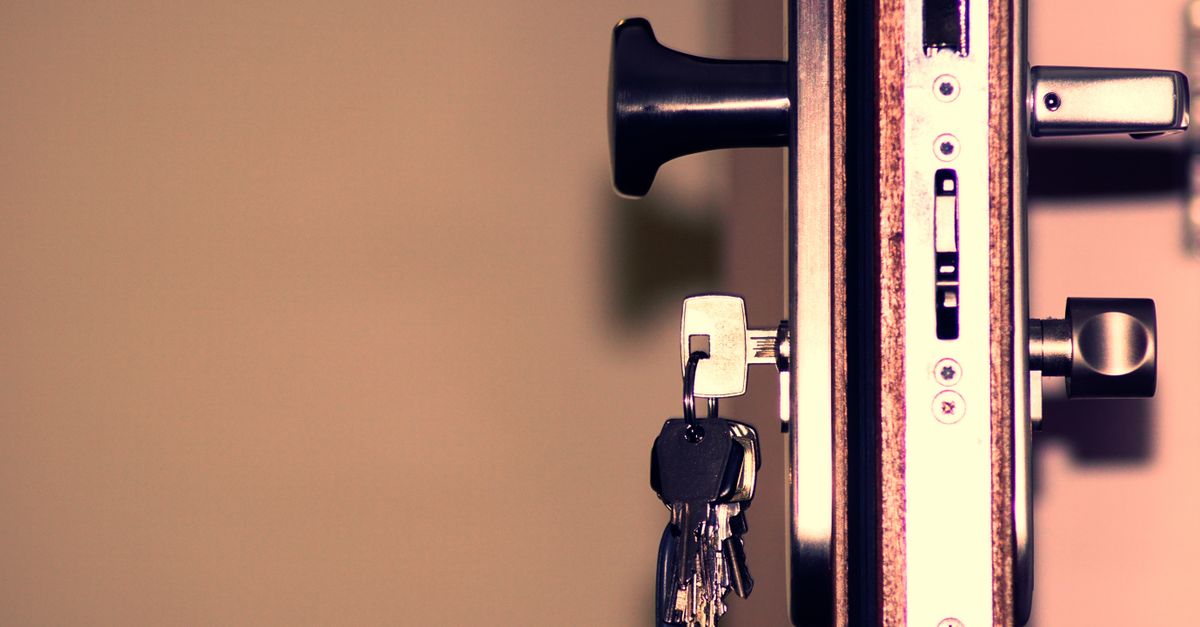
The grade system applies across lock types: cylindrical locks (your standard door knob lock or lever), deadbolts, and mortise locks. A Grade 1 mortise lock is a particularly robust option because the mortise form factor — where the lock body is recessed into a pocket cut into the door's edge — distributes stress across a larger area of the door than a surface-mounted bored lock. This is why Grade 1 mortise lock sets are the preferred choice for commercial and high-traffic residential applications. The L Series Grade 1 mortise lock, for instance, is a product line frequently specified in commercial construction precisely because it combines the ANSI Grade 1 durability rating with the structural advantages of the mortise form. Understanding both the grade and the lock type together is what gets you the right hardware for your specific door.
## Grade 1 vs. Grade 2 Door Knob Lock and Deadbolt: Which Door Gets Which?
A practical way to think about it: Grade 1 is your front door, your rear entry door, any door that faces the outside world or a shared hallway in a multi-unit building. Grade 2 is a reasonable choice for interior doors that need a locking function — a home office, a bedroom, a utility closet — where forced-entry resistance is a secondary concern and smooth daily operation is the priority. Grade 3 hardware belongs almost nowhere you care about securing. If you're a renter on the outskirts of the Rutgers University neighborhood or a homeowner near Boyd Park, your exterior door deserves at minimum a Grade 2 deadbolt paired with a reinforced strike plate, and ideally a Grade 1 deadbolt or mortise lock on any door that represents the main point of entry.
There's another layer most homeowners miss: the lock grade only tells you about the lock body itself. The surrounding door, frame, and strike plate have to match that grade. A Grade 1 deadbolt installed with a single-screw strike plate screwed into soft pine framing will fail at the frame long before the lock body is compromised. A qualified locksmith will look at the entire door assembly — the frame, the door thickness, the hinge placement, and the existing prep (hole size and backset) — before recommending a specific grade and product. That complete assessment is something a box-store self-install rarely accounts for.
## The Mortise Lock Advantage: When Grade 1 Means More Than Just a Number
If you want the most secure door hardware available for a residential or commercial entry, a Grade 1 mortise lock is the answer most experienced locksmiths will point you toward. The mortise lock's body sits inside the door, not on top of it, which means there's no exposed mounting hardware to attack and the door's own wood or steel mass is working in your favor. Commercial properties along New Brunswick's French Street corridor, medical offices near Robert Wood Johnson University Hospital, or multi-family buildings in the Buccleuch neighborhood often specify mortise lock sets precisely for this reason — heavy daily traffic demands hardware that won't wear out, and a Grade 1 rating ensures it's been tested to handle it. A skilled locksmith who specializes in mortise lock installation will cut the precise mortise pocket, align the faceplate flush with the door edge, and verify that the strike pocket in the frame is equally solid. Done correctly, a mortise lock installation raises the overall security of the entry point well beyond what the grade number alone suggests.
For commercial clients, the conversation around a Grade 1 mortise lock also involves function sets — whether you need a passage function, a classroom function, an office function with key-outside and thumb-turn inside, or a storeroom function with key-only entry. A commercial locksmith can specify the correct function set for each door in a building, ensuring that every entry point is both secure and operationally logical for the people using it. This is not a one-size product; it's a system, and getting it right requires someone who knows the hardware deeply. If you're building out a commercial space or conducting a security audit of an existing property, call (000) 000-0000 and our team will assess every door and recommend the appropriate grade and lock type for each application.
## 24/7 Lockout Service, Lost Key Replacement, and Emergency Locksmith Response New Brunswick
Understanding lock grades also matters when you're locked out or dealing with a lost key situation, because the grade of the existing lock directly affects how a professional locksmith approaches the job. A Grade 1 deadbolt with a high-security cylinder is designed to resist unauthorized opening — which is exactly what you want when the lock is working for you, but it means a legitimate lockout response requires a skilled technician with the right tools and the right verification process. Our team will always confirm your identity and ownership before any work begins: a valid photo ID matching the address, a vehicle registration if it's a car lockout, or a lease agreement are typical forms of ownership verification we accept. This is a firm policy that protects you as much as it protects anyone else.
Lost key replacement and lock rekey services both connect directly to the grade of your existing hardware. When keys are lost or stolen, rekeying — rather than full lock replacement — is often the right move for Grade 1 and Grade 2 hardware that is otherwise in good condition. Rekeying changes the internal pin configuration so old keys no longer work, while the lock body itself stays in place. If the hardware is worn, the wrong grade for the application, or has been compromised, our locksmiths will recommend a full lock replacement and walk you through what grade and type makes sense for that specific door. We're a mobile locksmith team, which means we come to you — whether you're standing outside your house at midnight or stuck in a parking structure near the New Brunswick train station. Our emergency locksmith response operates around the clock, every day of the year, with no after-hours service gap.
## Car Key Programming, Lock Rekey Replacement, and the Full Range of Services We Offer New Brunswick
Lock grading expertise is just one part of what a full-service mobile locksmith covers. Modern vehicles present their own version of the security-complexity problem: a lost or damaged smart key for a vehicle requires programming that matches the key's transponder to the car's immobilizer system, not just a cut key. Our team handles car key programming for a wide range of makes and models, including European vehicles — drivers who need a locksmith that comes to them for a BMW X2 or a BMW M2 will find that our mobile unit carries the diagnostic equipment to program replacement keys on-site. Whether you need a BMW M2 locksmith open now at an odd hour or a BMW X2 locksmith near you after a key breaks in the ignition, we dispatch directly to your location. The final quote you receive accounts for the vehicle type, the key type required, the programming complexity, and travel distance — and you'll have that confirmed price before we start any work.
Here is a specific list of the services our New Brunswick team provides: residential deadbolt installation, Grade 1 mortise lock installation, Grade 2 door knob lock replacement, lock rekeying for residential properties, lock rekeying for commercial properties, master key system design and setup, high-security cylinder upgrades, smart lock and keypad lock installation, sliding door lock repair and replacement, garage door lock service, door frame and strike plate reinforcement, commercial door closer installation, panic bar and push bar installation, access control system integration, safe opening and safe combination changes, car lockout service, house lockout service, office and commercial lockout service, car key cutting by code, transponder key programming, smart key and proximity fob programming, BMW key replacement and programming, broken key extraction from locks and ignitions, ignition repair and replacement, duplicate key cutting for residential and commercial hardware, window lock installation, and 24/7 emergency locksmith response throughout New Brunswick and surrounding Middlesex County communities including Freehold NJ. Every service call begins with identity verification and ends with a clean, tested result — no loose hardware, no scratched cylinders, no guesswork.
## How Much Does a Locksmith Cost in NJ — and What Proof Do You Need?
Two questions come up constantly, and they deserve straight answers. On pricing: a locksmith quote in New Jersey reflects several real variables — the type of lock or vehicle involved, the time of day (overnight and holiday calls carry different operational costs), the distance our technician travels to reach you, and the parts required for the job. A mortise lock installation with a Grade 1 commercial-grade set involves more labor and higher-cost hardware than rekeying a standard door knob lock, so the quotes will differ meaningfully. We never quote a price over the phone without knowing these specifics, but we do confirm an exact price before any work begins. You will never see a surprise on the bill. On proof of ownership: for any residential lockout or rekey, a government-issued photo ID matching the address on the property is standard. For vehicle work, your driver's license and vehicle registration together establish ownership clearly. If you're a property manager or landlord, written authorization or a management agreement helps verify your right to access the unit. These steps exist to protect homeowners and tenants — they are not obstacles, they are the professional standard.
One question that circulates online is what locks a locksmith cannot open. The honest answer is that very few locks are truly impossible for an experienced locksmith — but high-security cylinders with anti-pick, anti-drill, and anti-bump features will take significantly more time and specialized tools than standard Grade 2 hardware. If you're wondering where to find locksmiths in Freehold NJ or anywhere else in our service area, the answer is simple: our mobile team covers the broader Middlesex and Monmouth County region, so whether you're in Freehold or right in the heart of New Brunswick, we come to you. Call (000) 000-0000 any time — we answer 24/7, confirm your situation, and dispatch immediately.
## Our Locksmith Services New Brunswick: A Local Team That Knows the Area
New Brunswick is a layered city — historic brownstones near the Hiram Market district sit a few blocks from modern mixed-use developments around the New Brunswick train station, and older multi-family housing near the Rutgers College Avenue campus has very different door prep standards than the commercial properties along Route 1. Our technicians work across all of these contexts regularly, which means we arrive already understanding the door types, frame conditions, and lock styles common to each part of the city. That local familiarity matters: a skilled locksmith who knows that older buildings in this area frequently have non-standard mortise pockets or undersized door preps brings the right tools and parts on the first visit, rather than making a second trip. For car key programming, lost key replacement, lock rekey and replacement, or a 24/7 lockout anywhere in the New Brunswick area, our mobile unit is ready to roll.
## Buying the Right Lock: A Practical Checklist Before You Visit the Hardware Store
Before you buy any deadbolt, door knob lock, or mortise lock set, run through these practical checks. First, confirm the door prep: measure the backset (the distance from the door edge to the center of the bore hole — typically 2-3/8 inches or 2-3/4 inches) and the cross-bore diameter. Buying a lock that doesn't match your existing prep means either cutting new holes or buying adapter kits, both of which add complexity. Second, identify the door material: steel, solid wood, hollow-core wood, and fiberglass each interact with lock hardware differently, and mortise lock installation on a hollow-core door requires different preparation than on a solid-wood entry. Third, decide on the grade based on the door's role — exterior entry doors get Grade 1, interior privacy doors can use Grade 2, and Grade 3 is not worth the savings. Fourth, consider the cylinder: many Grade 1-labeled locks ship with standard pin tumbler cylinders that don't offer high-security features; a locksmith can swap in an upgraded cylinder while keeping the rest of the lock body. Fifth, think about the strike plate: a Grade 1 lock paired with a two-screw strike plate using half-inch screws is only as strong as those screws — proper installation uses 3-inch screws that anchor into the stud behind the door frame. If any of this feels like more complexity than you want to navigate alone, that is precisely what a professional mortise lock and deadbolt installation service is for. Call (000) 000-0000 and we will handle the assessment, the product selection, and the installation correctly the first time.
Frequently asked questions
What is a Grade 1 mortise lock, and do I need one for my home?+
A Grade 1 mortise lock is a lock set that has passed the most demanding tier of ANSI/BHMA durability and security testing — including high cycle counts and significant forced-entry resistance — and uses a mortise-style body that is recessed into the door's edge rather than surface-mounted. For most standard residential exterior doors, a Grade 1 deadbolt is sufficient. A Grade 1 mortise lock becomes the right choice when the door sees very heavy daily traffic, when the application is commercial, or when you want the highest possible security margin on a primary entry point. A locksmith who specializes in mortise lock installation can look at your specific door and tell you whether the prep, the door material, and your security goals make a mortise lock set the smart upgrade.
How much does a locksmith cost in NJ — and how much should an emergency locksmith cost?+
The honest answer is that there is no universal flat rate because the final price depends on real variables: the specific lock type or vehicle involved, the time of day, how far the technician travels to your location, and what parts the job requires. A routine residential rekey during daytime hours has different cost inputs than a Grade 1 mortise lock installation with new hardware, which differs again from overnight emergency car key programming. What we can promise is that you will receive a confirmed, exact price before any work begins — no surprises, no adjustments after the fact. Call (000) 000-0000, describe your situation, and we will give you a clear quote based on your specific job.
What proof do I need to show a locksmith before they can open my door or replace my car key?+
For a residential lockout or rekey, a government-issued photo ID with an address matching the property is the standard requirement. For a vehicle — whether it's a car lockout or a lost key replacement including car key programming — your driver's license and vehicle registration together establish ownership. Property managers and landlords should have written authorization or a management agreement on hand. These verification steps are not bureaucratic hurdles; they are how a professional locksmith protects homeowners and tenants from unauthorized access. Any legitimate locksmith will ask for this information before starting work.
What locks can locksmiths not open, and does my lock grade affect that?+
A skilled and experienced locksmith can open the vast majority of residential and commercial locks using professional techniques. However, high-security locks — particularly those with anti-pick, anti-drill, anti-bump pin systems, and hardened steel inserts — require significantly more time, specialized tools, and expertise than standard Grade 2 hardware. In some cases, accessing a very high-security lock through non-destructive means is not practical, and controlled drilling becomes the appropriate professional response. The grade of your lock absolutely affects the difficulty: a Grade 1 deadbolt with a high-security cylinder is doing exactly what it was designed to do when it resists unauthorized opening. That is a feature, not a flaw — it just means you want a genuinely skilled locksmith handling the job, not someone who underestimates the hardware.